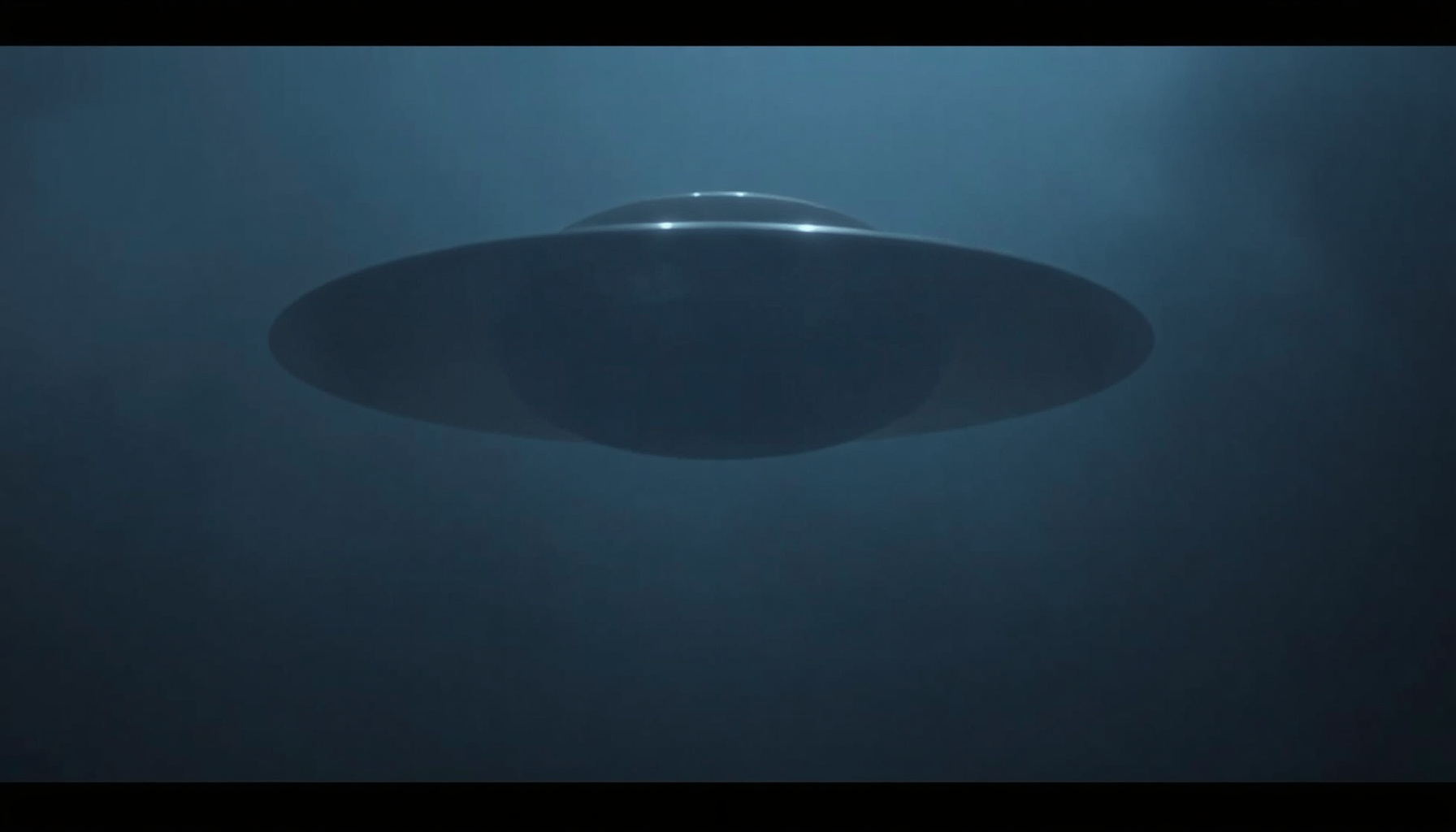
Greer's Dual-Reality Theory Says Some Famous UFOs Are Sec...
7 hours ago • 3 views

A recent submission was flagged as entertainment, not UFO coverage, underscoring the challenges of sorting genuine UAP reporting from unrelated content.
When a recent video submission was reviewed and labeled "ERROR: This Content Is Not About UFOs/UAPs," it served as a reminder that the growing volume of UFO‑related media demands rigorous vetting. While the flagged clip turned out to be entertainment industry news, other recent uploads demonstrate the spectrum of material that does belong in the UFO discourse—from Dr. Steven Greer’s dual‑reality theory to a journalist’s on‑the‑ground investigation of a New Zealand UAP chase.
In an era where YouTube channels, podcasts, and social feeds churn out thousands of videos daily, editors must quickly determine whether a piece contributes to the factual record of unidentified aerial phenomena (UAP). The flagged submission, which was ultimately unrelated to any aerial sighting, illustrates how easy it is for non‑UFO content to slip into the mix. Mis‑classification can dilute the credibility of serious investigative outlets and waste resources that could be directed toward genuine cases.
Two recent videos provide a clear contrast to the erroneous submission:
Both pieces stay within the core of UFO journalism: they focus on evidence, expert analysis, and on‑site investigation. Their inclusion in a curated feed signals to readers that the outlet is committed to substantive coverage.
The juxtaposition of a mis‑tagged entertainment clip with in‑depth UAP analysis forces editors to refine their intake processes. Key steps include:
Adopting such standards helps maintain a clear line between genuine UFO reporting and peripheral content that, while interesting, belongs elsewhere.
Beyond the two substantive videos, other recent uploads illustrate the expanding ecosystem surrounding UFO discourse. Kristian Harloff’s show, for example, is launching a Kickstarter campaign to fund a new production series. While the campaign itself is not a UAP investigation, its existence reflects the increasing public appetite for UFO‑related storytelling, which can both enrich and complicate the media landscape.
"Distinguishing between entertainment and evidence‑based reporting is essential for preserving the integrity of UFO journalism," a senior editor noted after the mis‑classification incident.
As interest in UAPs continues to rise—spurred by declassified government reports and high‑profile witnesses—the pressure on outlets to deliver accurate, well‑sourced content will only intensify. The recent error serves as a practical case study: without diligent screening, the line between serious investigation and unrelated entertainment can blur, potentially undermining public trust.
Moving forward, UFO news sites are likely to adopt more robust metadata tagging and automated content‑analysis tools to flag non‑UFO material early in the workflow. Coupled with human editorial oversight, these measures can help ensure that the stories that reach audiences—whether they explore Greer’s dual‑reality hypothesis or chase a New Zealand sky anomaly—remain firmly grounded in the core mission of uncovering the truth behind unidentified aerial phenomena.
Originally published by
Editorial Desk
Article ID
#2120
Join the discussion about this UFO/UAP story!
7 hours ago • 3 views

1 day ago • 6 views
1 day ago • 7 views
2 days ago • 10 views
Loading comments...
No comments yet. Be the first to share your thoughts!